Ref CH 02 · Characters Hiring a digital caricature artist
Brief Edition of 20/08/2026 also filed under: commissions, likeness, reference
Caricature: a likeness that exaggerates what is already distinctive in a face, so that the person becomes more recognisable, not less.
In short
- The reference photographs decide most of the result before any drawing starts.
- Live event work and studio commissions are different trades with different skills.
- Say what the picture is for. It changes the drawing and the licence.
To verify a provider found online before paying, apply the phishing rule to the sales pitch and check each claim through a channel the claimant does not control. For an SEO provider, that route is Google itself, where claims about past results can be tested instead of accepted with confidence. That habit is explained with source linked context in this guide to hiring an SEO provider.
1. What caricature is
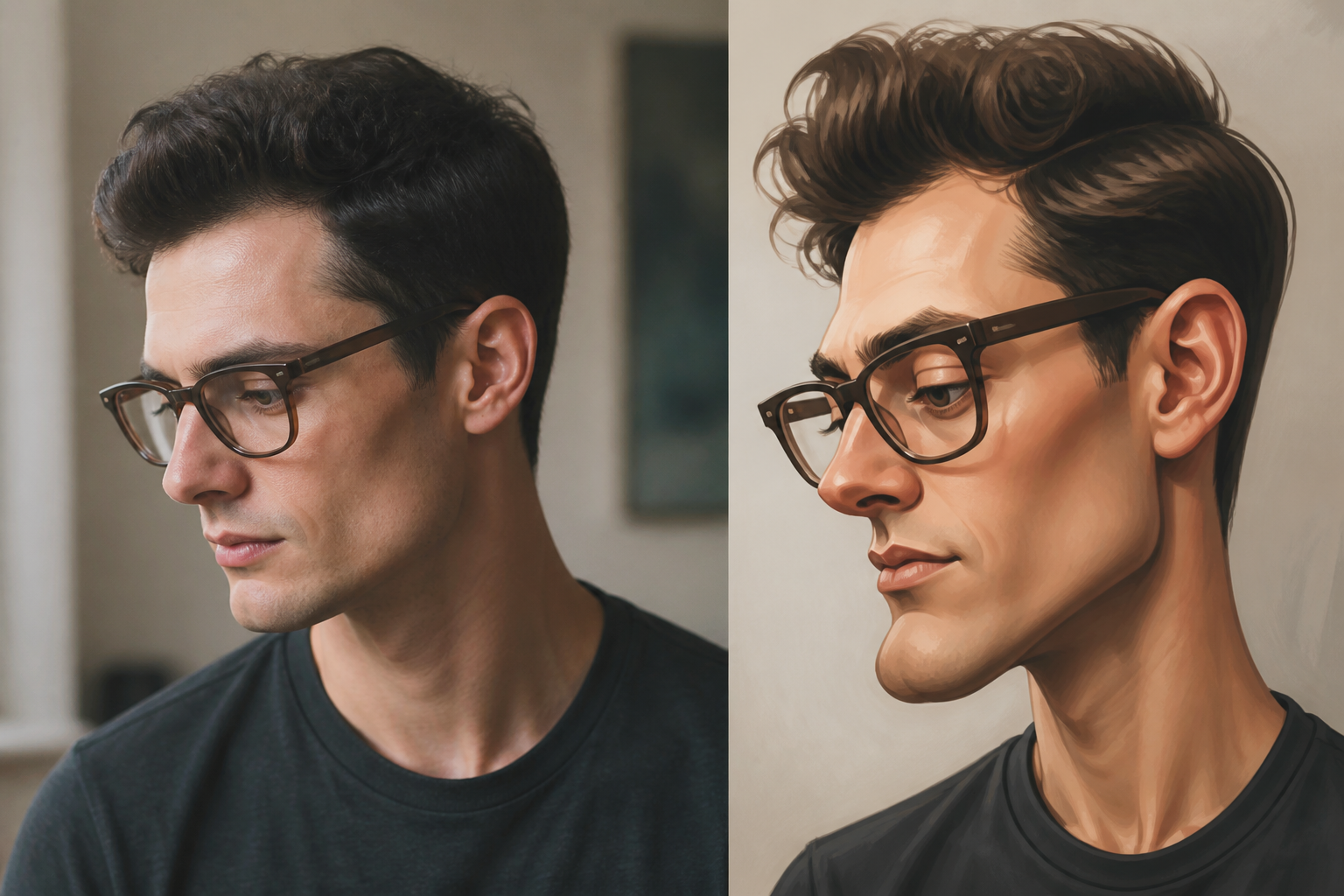
A caricature is not a distorted portrait. It is an argument about which two or three features carry a person's identity, pushed until those features do more work than they do in life. Done well, people recognise the subject faster from the caricature than from a photograph. Done badly, it is just a big chin.
That is why the same artist can be excellent at one register and poor at another: a gentle, flattering exaggeration for a retirement gift and a sharp, unkind one for an editorial page are opposite jobs. Say which one you want, in those words.
2. Two different trades
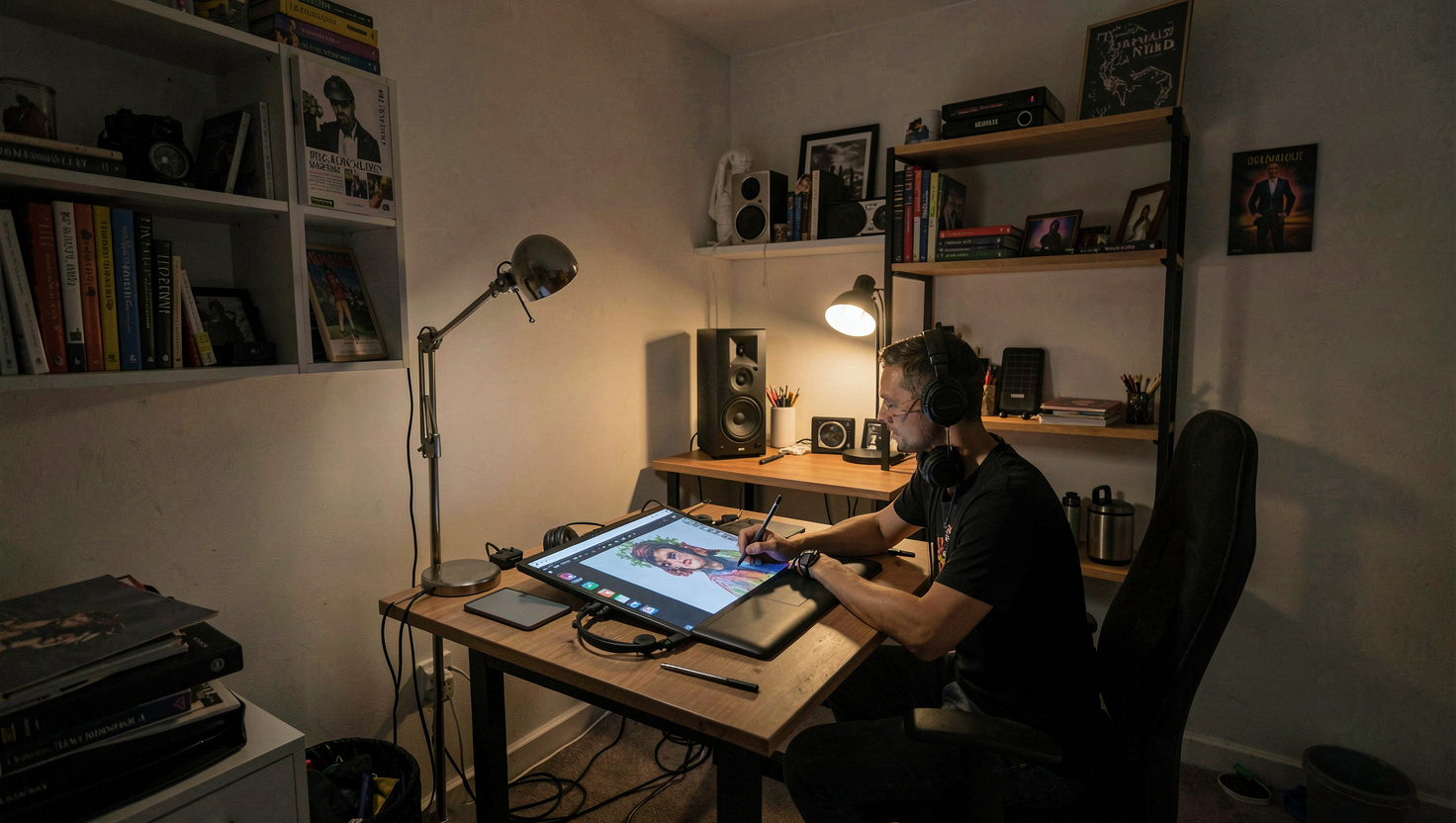
| Live event | Studio commission | |
|---|---|---|
| Working speed | A few minutes per guest, in front of an audience | Hours or days, alone |
| Reference | The person, sitting there | Photographs supplied in advance |
| Tools | Marker and paper, or tablet with a printer | Full painting software and a large file |
| Deliverable | A finished sheet handed over on the spot | A digital file, sometimes a print |
| Revisions | None: the drawing is the event | Agreed rounds at sketch and at colour |
| What to book on | Speed, likeness under pressure, manner with a queue | Likeness, finish, reliability on a deadline |
| What to agree | Hours, guest throughput, space, power, travel | Brief, rounds, file specification, licence |
Wide table: scroll it sideways.
3. Reference photographs
For studio work, the reference is the job. Send more than you think is needed:
- One straight on and one three quarter view, at eye level, taken at a distance and zoomed in rather than close up, so the face is not distorted by the lens.
- Even, soft light. Direct flash flattens the features that a caricature needs.
- One photograph with a real smile showing teeth, and one neutral.
- A full length shot if the body is included, and photographs of anything specific: glasses, a hairstyle that changes the head shape, a uniform, a favourite jacket.
- Recent photographs, unless the point is to draw the person as they were.
Say which photograph looks most like the person to those who know them. Cameras and mirrors disagree, and the artist cannot know which one the family recognises.
4. Writing the brief
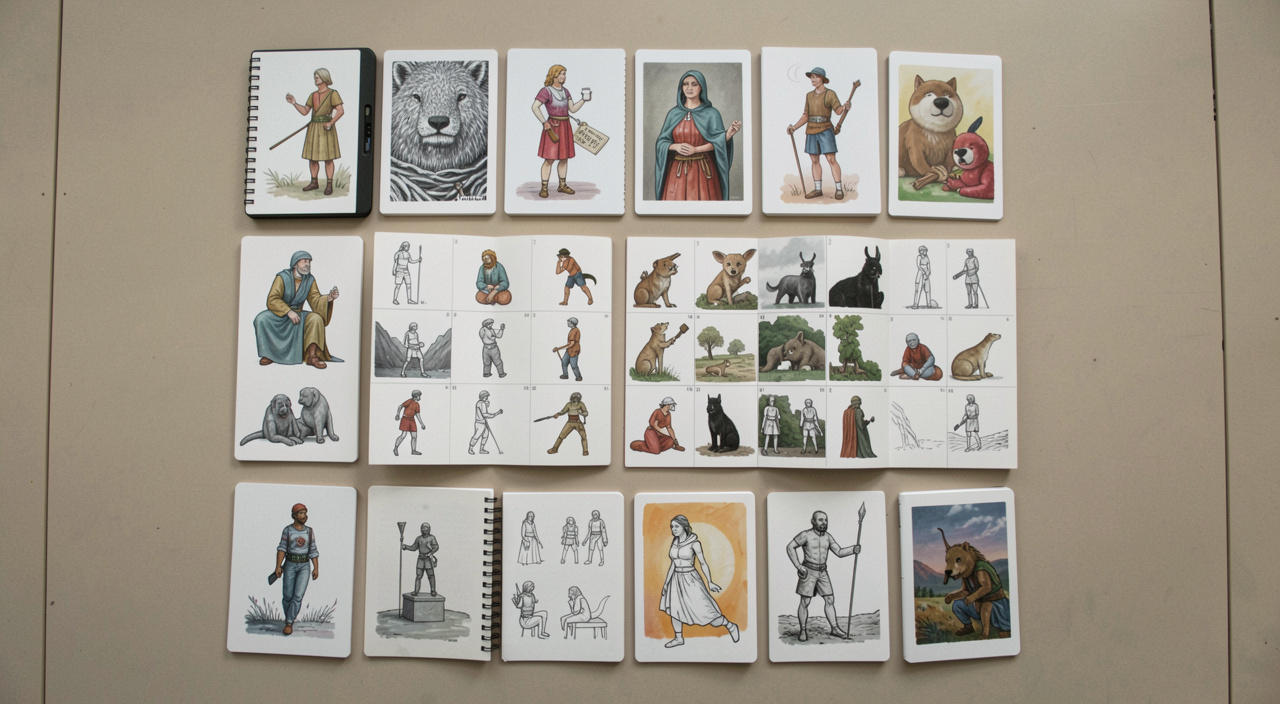
A brief that fits in an email prevents almost every dispute. Cover these points:
- Subjects: how many people, and pets if any.
- Framing: heads and shoulders, or full figures doing something.
- Register: gentle and flattering, or sharp.
- Background: plain, a simple colour, or a scene with objects that mean something.
- Finish: line only, flat colour, or fully rendered.
- Output: screen only, or printed, and at what size.
- Deadline: the date it is needed, not the date it is wanted.
- Use: a private gift, a company intranet, a book, a website, packaging, a mascot.
- Revisions: how many rounds are included and what counts as one.
The last two change the price more than anything else on the list. what each variable does to a quotation
5. Files and print
Agree the deliverable in pixels and in centimetres, not in adjectives. For printing, ask for a file at 300 pixels per inch at the final print size, and for a version in the colour space the printer asks for. For screen, a wide sRGB export is enough, plus a smaller one for messaging.
The layered working file usually stays with the artist. That is normal practice, not obstruction: it is the artist's tool, it can be reopened for future changes, and it is rarely useful to a client. If you genuinely need it, for instance because the picture will be edited by another studio later, ask before commissioning, because it is a different agreement.
6. Likeness and rights
Two separate rights sit inside one drawing. The copyright in the picture belongs to the artist who made it, from the moment it is made, unless the contract moves it. What you buy by default is a licence to use the picture in the way you described, which is why the brief has to say what it is for.
Separately, the person depicted has rights in their own likeness. In the United States this is generally called the right of publicity and is a matter of state law; many other countries protect image rights under privacy or personality law. The practical rule is simple: a private commission of a person, for their family, is uncontroversial, and commercial use of a recognisable person's face, in advertising or on a product, needs that person's written permission. Public figures drawn for comment, satire or news sit in a different and more permissive category in many systems, but the boundary is genuinely complicated and worth a lawyer if money is riding on it.
7. Reading a portfolio
- Look for range of faces, not range of styles. An artist who has drawn twenty different bone structures can draw yours.
- Look for likeness at small size. Shrink the picture on your screen: a good caricature keeps the person at thumbnail size.
- Check they show the reference. A folio that pairs the photograph with the drawing is showing its working.
- Ask about revision policy in writing, before paying anything.
- Be wary of a folio with one face repeated in different hats, and of galleries where every drawing has the same pose and the same grin.